

Beyond Invitations: Building Meaningful Father Engagement

A father misses a school event, and the story often writes itself before anyone asks a question.
He must not care. He must be hard to reach. He must not want to be involved.
Those assumptions can do real harm. They can shape how schools communicate, how organizations design programs, and how fathers experience support. They can also keep meaningful relationships from forming.
A better starting point is curiosity.
Instead of asking, “Why aren’t fathers involved?” ask, “What barriers may be preventing them from participating?” That shift changes everything. It moves the focus from blame to understanding. It invites schools and community organizations to look at systems, schedules, communication habits, and past experiences that may be standing in the way.
Father engagement grows when fathers and father figures feel welcomed, respected, informed, and equipped to support their children. That requires more than sending home a flyer or hosting one annual event. It takes intention, consistency, and a willingness to listen.

Start with curiosity instead of judgment
When schools and organizations talk about family engagement, mothers are often centered by default. Forms may list “mother” first. Emails may go to the parent who usually responds. Teachers may call the same caregiver every time. Event themes may assume mothers are the primary point of contact.
None of this is always intentional, but it sends a message.
Fathers may begin to feel like backup contacts rather than full partners. Some fathers may not know they are invited. Others may feel the invitation is not really meant for them. Some may have tried to participate before and left feeling judged, ignored, or out of place.
Curiosity helps interrupt those patterns.
It asks:
Who receives our messages?
What tone do we use when contacting fathers?
Do we reach out only when there is a problem?
Are our events scheduled for people with nontraditional work hours?
Do fathers see themselves reflected in our materials?
Are we welcoming father figures beyond biological fathers?
These questions do not excuse absence or remove responsibility. They help organizations understand what is happening beneath the surface. A father who works nights may care deeply but cannot attend evening programs. A grandfather raising a child may want support but may not know if the invitation includes him. A stepfather may be present every day but unsure whether the school will recognize his role.
Better engagement begins when adults stop filling in the blanks with judgment.
Look at the barriers before judging participation
Fathers may face many of the same barriers as other caregivers, but those barriers can show up differently based on family structure, culture, work demands, and past experiences.
A school or organization that wants stronger father engagement should examine both practical barriers and emotional barriers.
Work schedules can limit visibility
Many fathers work shifts that conflict with school events. Some work early mornings, late nights, weekends, or multiple jobs. Others may not have paid time off or may risk losing wages if they attend a meeting during the day.
If engagement opportunities happen only at 10:00 a.m. on weekdays, participation will be limited by design.
The answer is not to assume fathers are unavailable. The answer is to offer options. Morning check-ins, evening workshops, Saturday programs, recorded sessions, and virtual meetings can open the door for more consistent participation.
Transportation can affect attendance
Transportation challenges can keep families from attending school and community events. A father may share one vehicle with other family members. He may rely on public transportation. He may live across town from the school or child care site.
Organizations can reduce this barrier by choosing accessible locations, offering virtual options, partnering with community spaces, or helping families plan around transportation needs when possible.
Even small adjustments can communicate respect. Clear directions, parking information, bus route details, and flexible arrival times can make participation feel more manageable.
Family dynamics may shape involvement
Some fathers navigate complicated family dynamics. Separation, divorce, custody arrangements, incarceration history, child welfare involvement, blended families, or strained co-parenting relationships can all affect how a father participates.
Schools and organizations should avoid assuming that one caregiver speaks for everyone. When appropriate and safe, fathers should receive direct communication about academics, behavior, events, and available support.
Respecting family dynamics also means being careful with language. “Bring your dad” may not fit every family. “Bring a father, grandfather, uncle, stepfather, mentor, or trusted father figure” creates more room for children to participate without shame.

Previous negative experiences can create distance
Some fathers carry painful memories of school. They may have felt labeled as children. They may have been disciplined harshly. They may have experienced racism, bias, exclusion, or shame in educational settings.
Others may have had negative experiences as parents. If every call from school has been about a behavior issue, a father may begin to expect criticism. If meetings feel rushed, confusing, or one-sided, he may stop attending.
A trauma-informed approach recognizes that avoidance can be a form of protection. It does not ask, “What is wrong with him?” It asks, “What may have happened that shaped this response?”
That question creates room for trust.
Communicate with fathers directly
One of the most practical ways to engage fathers is also one of the most overlooked. Contact them directly.
Too often, schools send information to one caregiver and assume it will reach everyone else. That may work in some families, but it can exclude fathers, especially in households where caregivers do not live together.
Direct communication shows fathers that they matter.
This can include:
Adding fathers and father figures to email lists
Sending text reminders to more than one caregiver
Asking for preferred contact methods
Calling fathers with positive updates
Sharing academic progress before concerns become urgent
Inviting fathers to planning meetings early, not as an afterthought
The tone of communication matters as much as the method. A message that says, “We value your insight and want to include you in the plan” feels different from a message that says, “Your child is in trouble again.”
Fathers should hear from schools when children are growing, trying, improving, helping, and showing leadership. If contact only happens during crisis, the relationship becomes tied to stress.
Positive communication builds trust before difficult conversations are needed.
Offer programs that fit real life
Inviting fathers is a start. Designing programs with their realities in mind is the next step.
A strong father engagement plan includes different times, formats, and entry points. Not every father will come to a workshop. Not every father wants a lecture. Not every father can attend a school-based event. Engagement should offer several ways to connect.
Provide flexible scheduling
Schools and organizations can expand access by offering:
Morning sessions before work
Evening programs after work
Saturday events
Lunch-hour virtual check-ins
Short recorded videos
Drop-in resource tables
Family learning nights with flexible arrival times
The goal is not to fill every calendar slot. The goal is to stop treating one schedule as if it fits every family.
When planning, ask fathers what times actually work. A simple survey, quick phone call, or sign-in question can reveal patterns that staff may not see.
Create father-child activities
Some fathers may be more likely to attend when the focus is connection with the child, not a formal meeting.
Father-child activities can include:
Reading mornings
STEM nights
Art and music sessions
Cooking demonstrations
Outdoor play days
Fitness challenges
Career and hobby sharing
Service projects
These activities help fathers create positive memories with their children in school and community spaces. They also give staff a chance to see fathers as caregivers, mentors, problem-solvers, and sources of strength.
A father-child event should not feel like a photo opportunity. It should create space for real connection.

Ask fathers what support they need
Workshops should not be based only on what professionals think fathers need. Ask fathers directly.
They may want support with:
Helping children with homework
Understanding school technology
Navigating behavior concerns
Supporting children after trauma or grief
Co-parenting communication
Building routines at home
Preparing children for transitions
Understanding special education services
Strengthening emotional connection
A fatherhood program becomes more useful when fathers help shape it. Listening also builds ownership. People are more likely to attend something they helped design.
Include fathers in academic and behavioral planning
Father engagement should not sit outside the core work of schools. Fathers need to be included in conversations about learning, behavior, attendance, and social-emotional support.
When a child struggles academically, fathers should be invited into the support plan when appropriate. When behavior concerns arise, fathers should be part of the conversation before the situation escalates. When a child has strengths, goals, or leadership opportunities, fathers should hear about those too.
This does not mean every father will respond right away. It means the school makes a clear, consistent effort to include him as a partner.
A helpful planning meeting gives fathers:
Clear information without blame
Space to share what they see at home
Specific ways to support learning
A chance to ask questions
Follow-up after the meeting
Recognition of what the child does well
Behavior planning should be especially careful. If fathers are contacted only for discipline, they may come to expect conflict. A better approach balances accountability with respect.
For example, instead of saying, “We need you to come in because your child is causing problems,” a staff member might say, “We are working on a plan to help your child succeed, and your perspective would help us understand what support may work best.”
That difference matters.
Recognize strengths before problems occur
Fathers are often described through deficits. Absent. Uninvolved. Hard to reach. Disengaged.
Those labels can become barriers by themselves.
A strengths-based approach looks for what fathers already bring. A father may teach patience through fishing, math through cooking, discipline through sports, creativity through music, or responsibility through daily routines. A father figure may provide transportation, emotional safety, homework support, cultural connection, or steady encouragement.
Schools and organizations can recognize these strengths in simple ways:
Invite fathers to share skills, hobbies, or life experiences
Ask what they are proud of in their child
Notice positive caregiver-child interactions
Thank fathers for specific contributions
Include father stories in newsletters or family boards with permission
Create leadership roles for fathers in planning and mentoring
Recognition should be genuine. Fathers do not need empty praise. They need to know their presence and perspective are valued.
When organizations see fathers as assets, engagement becomes more authentic.
Welcome all father figures
Children may receive fatherly support from many people. Grandfathers, stepfathers, uncles, older brothers, godfathers, coaches, mentors, foster fathers, and family friends can all play meaningful roles.
Programs that welcome only biological fathers can unintentionally exclude children and caregivers who need connection. Inclusive language helps more families feel seen.
Instead of using narrow invitations, try phrases such as:
“Fathers and father figures are welcome.”
“Grandfathers, stepfathers, uncles, mentors, and trusted caregivers are invited.”
“Children may attend with any supportive adult.”
This approach respects the many ways families are formed. It also helps children participate without feeling that their family structure is being judged.
Inclusion does not water down fatherhood programming. It strengthens it by focusing on the role children need: a caring adult who shows up, supports growth, and builds connection.

Build authentic partnerships that last
Attendance is easy to count. Partnership is harder to measure, but it matters more.
A packed event does not always mean fathers feel connected. A small group can still be powerful if fathers leave feeling respected, informed, and ready to support their children.
Authentic partnerships include shared voice and shared responsibility. Fathers are not treated as guests who visit once. They are invited to contribute ideas, ask questions, name barriers, and lead when ready.
Schools and organizations can build stronger partnerships by creating feedback loops. After a program, ask fathers what worked and what did not. Before planning the next one, ask what topics matter most. When fathers suggest changes, show how their input shaped the result.
That follow-through builds credibility.
Partnership also grows through consistency. One fatherhood breakfast will not undo years of feeling excluded. One positive phone call will not erase every negative school experience. Trust develops through repeated interactions that feel respectful and predictable.
The message should be clear: You belong here. Your child benefits from your involvement. Your voice matters.
A practical checklist for stronger engagement
Schools and organizations can begin with a simple review of current practices. The following questions can guide team discussions, family engagement planning, or professional development.
Do fathers receive information directly?
Are contact lists updated to include father figures when appropriate?
Do event times reflect different work schedules?
Are virtual options available when possible?
Do materials show and name fathers and father figures?
Are fathers contacted for positive reasons?
Do academic and behavior plans include father input?
Are workshops based on what fathers say they need?
Do staff understand how trauma can affect trust and participation?
Are grandfathers, stepfathers, uncles, mentors, and other father figures clearly welcomed?
Are fathers invited to lead, not just attend?
This checklist is not a one-time task. It is a way to keep improving.
Moving beyond invitations
Father engagement grows when schools and organizations replace judgment with curiosity, design around real barriers, and build relationships before problems occur.
The work is practical. Communicate directly. Offer flexible options. Create father-child activities. Include fathers in academic and behavioral planning. Ask what support they need. Recognize their strengths. Welcome the full circle of father figures who support children every day.
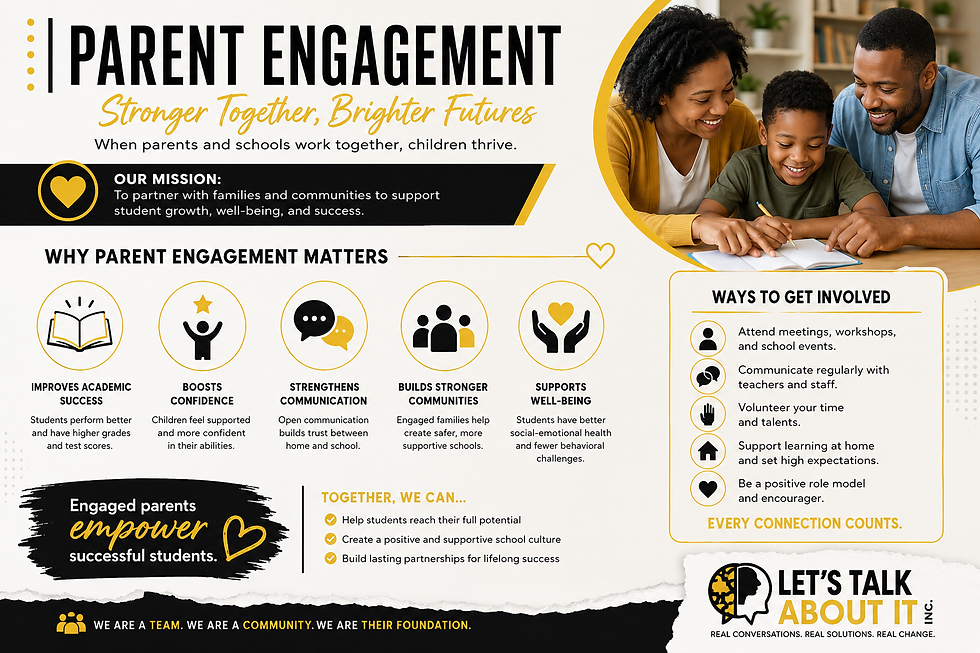
Let’s Talk About It, Inc. provides trauma-informed parent engagement workshops, professional development, and customized fatherhood programming for schools and community organizations.
The next step is clear. Move beyond invitations and create meaningful opportunities for fathers to connect, contribute, and lead.


Comments